The Hidden Truth: In House vs. Outsourcing. How to Significantly Reduce Business Costs

The Hidden Truth: In House vs. Outsourcing. How to Significantly Reduce Business Costs
In the modern corporate landscape, growth is the ultimate goal. However, growth often comes with a hefty price tag. For many CEOs and business owners, the traditional path to expansion involves hiring more people, renting larger offices, and increasing internal infrastructure. But as margins tighten and global competition increases, savvy leaders are looking for smarter ways to reduce business costs without sacrificing quality or speed.
The debate between hiring inhouse and outsourcing has shifted from a matter of convenience to a fundamental strategic decision. While having a team in the same room as you feels secure, the financial reality of maintaining a full-time, local staff can be staggering. In this comprehensive guide, we will break down the true costs of both models and show you why outsourcing is often the key to scaling your business in a sustainable, high-profit way.
The Real Price Tag of In-House Hiring
When most managers think about the cost of a new hire, they look at the base salary. If an employee earns $60,000 a year, they budget $60,000. Unfortunately, this is a dangerous misconception. The “fully loaded” cost of an employee is typically 1.25 to 1.4 times their base salary.
Recruitment Costs
Before an employee even starts their first day, you have already spent thousands. Recruitment costs include job board fees, background checks, and, most importantly, the time your leadership team spends reviewing resumes and conducting interviews. Every hour a senior manager spends interviewing is an hour they aren’t focused on revenue-generating activities.
Payroll Taxes and Benefits
Once the hire is made, the hidden costs begin to stack up. You are responsible for payroll taxes, social security contributions, and workers’ compensation insurance. Furthermore, to stay competitive in the local market, you must offer health insurance, 401(k) matching, and paid time off. These non-negotiable expenses quickly erode your profit margins.
Overhead Expenses
An inhouse employee needs a place to sit. This contributes to your overhead expenses, which include office rent, utilities, high-speed internet, and office furniture. You also need to provide hardware (laptops, monitors) and software licenses (Slack, Zoom, specialized industry tools). When you add up the square footage and the gear, a single in-house seat can cost a company an additional $10,000 to $15,000 annually.
Why Outsourcing is the Superior Financial Strategy
Outsourcing is no longer just about finding the cheapest labor; it is about talent acquisition at a global scale with a fraction of the financial friction. When you partner with an outsourcing provider, you transition from a high fixed cost model to a variable cost model, which is essential to reduce business costs during volatile economic times.
Unmatched Cost Effectiveness
The primary driver for outsourcing is cost effectiveness. By hiring from regions with a lower cost of living but high educational standards, you can secure top tier talent for 50% to 70% less than local equivalents. This isn’t about “cheap” work; it’s about arbitrage. You are getting the same level of output for a much lower input, allowing you to reinvest those savings back into your marketing or product development.
Remote Workforce Benefits
One of the most significant remote workforce benefits is the complete elimination of physical overhead. When your team is distributed, you no longer need to pay for a massive downtown office. You don’t pay for the coffee, or the cleaning crew. Your team is responsible for their own workspace, and the outsourcing agency usually handles the necessary hardware and security protocols.
Operational Efficiency and Focus
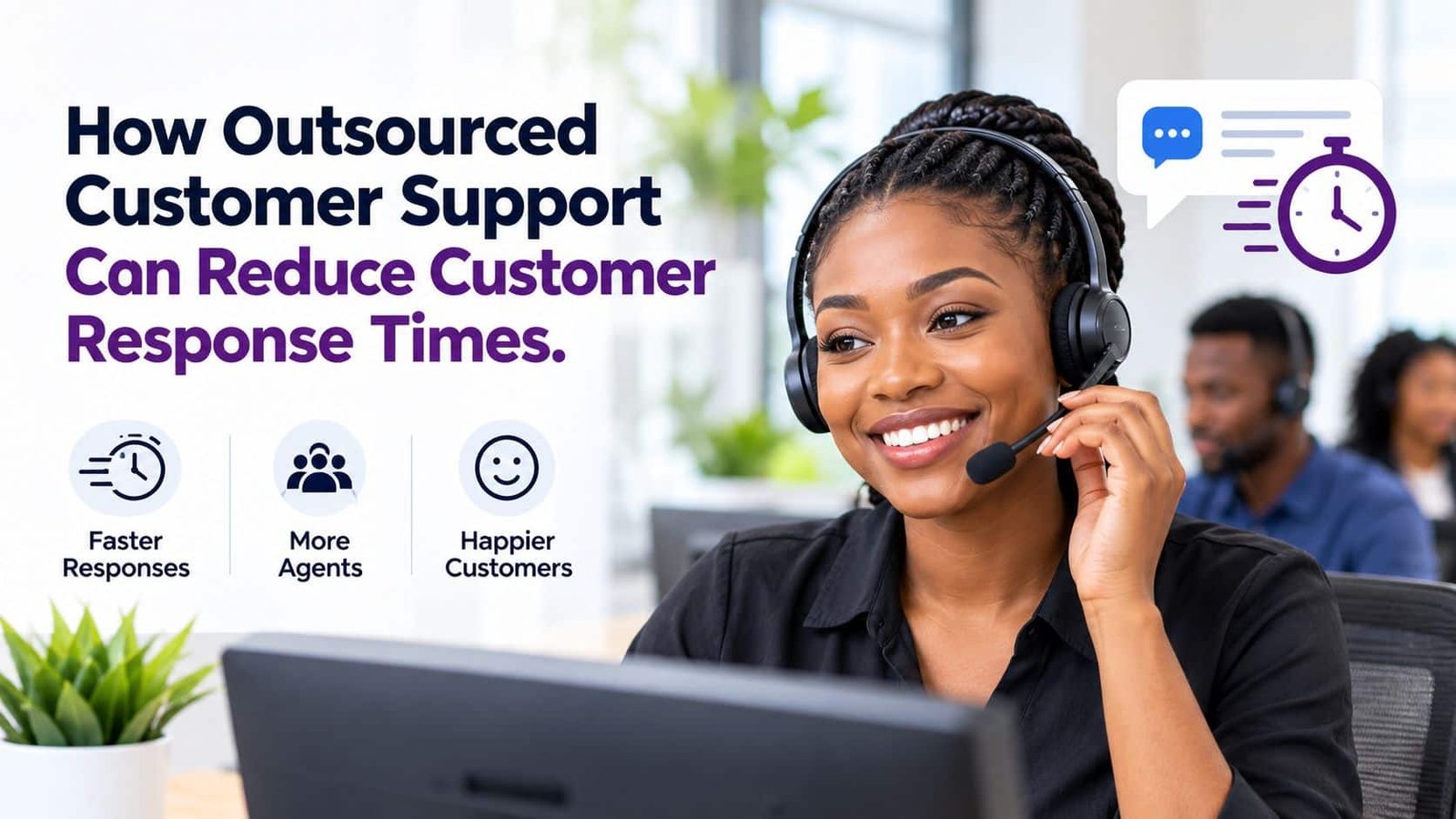
Outsourcing improves operational efficiency by allowing your core team to focus on what they do best. Often, inhouse teams become bogged down by administrative tasks or specialized roles that don’t require a fulltime, local presence (like data entry, basic bookkeeping, or customer support).
- Specialization: You can hire an expert for a specific task rather than a generalist who is “good enough” at everything.
- Process Optimization: Outsourcing firms often have prebuilt workflows that are more efficient than those built from scratch inhouse.
- 24/7 Operations: By utilizing global time zones, your business can remain active while you sleep, increasing your total output without increasing your stress.
Business Scalability: Growing Without the Growing Pains
The biggest challenge of the inhouse model is its rigidity. If you land a huge contract and need five new people, the hiring process could take three months. If business slows down, laying off in-house staff is expensive, legally complex, and damaging to morale. Business scalability is where outsourcing truly shines.
With an outsourcing partner, you can scale up or down within weeks, not months. This agility allows you to take risks and explore new markets without the fear of being locked into long-term employment contracts and high payroll taxes. This flexibility is the cornerstone of scaling your business in the 21st century.
Comparing the Long Term ROI
When you look at the 5year horizon, the gap between inhouse and outsourcing widens. Inhouse employees require annual raises, promotions, and continuous training. There is also the risk of turnover; when a local employee leaves, you lose institutional knowledge and must pay those recruitment costs all over again.
In contrast, an outsourcing partner manages the career path of the contractors. If an individual leaves, the agency is responsible for finding and training a replacement at no extra cost to you. This stability ensures that your talent acquisition strategy remains robust and cost-predictable.
Frequently Asked Questions (FAQ)
How much can I actually save by outsourcing?
Most businesses report that they reduce business costs by 40% to 60% when they transition specific departments to an outsourced model. This includes savings on salary, benefits, office space, and equipment.
Is the quality of work the same as inhouse?
Yes, and in some cases, it is better. Because you have access to a global talent pool, you aren’t limited to the people who live within a 20mile radius of your office. You can find highly specialized experts who prioritize operational efficiency and high quality delivery.
How do I manage a remote team effectively?
Modern tools like Slack, Asana, and Zoom make management seamless. Successful outsourcing relies on clear KPIs and regular communication. Many companies find that remote teams are actually more productive because they are focused on output rather than “office politics.”
Is outsourcing only for large corporations?
Not at all. Small and medium-sized enterprises (SMEs) stand to gain the most from outsourcing because it allows them to compete with larger companies by keeping their overhead expenses low and their agility high.
Conclusion: Make the Smart Move for Your Bottom Line
The choice is clear. If you want to reduce business costs while maintaining a high standard of excellence, the traditional inhouse only model is no longer the most effective path. By embracing cost effectiveness through outsourcing, you free up the capital and mental energy needed to focus on high level strategy and growth.
Scaling your business shouldn’t be a financial burden. It should be an exciting journey of expansion. By leveraging the remote workforce benefits and specialized talent acquisition strategies of a professional partner, you can build a leaner, meaner, and more profitable organization.
Are you ready to stop overpaying for overhead and start investing in growth? Camillo Outsourcing specializes in helping businesses navigate the transition to a high efficiency outsourced model. We take the complexity out of hiring, so you can focus on the results.
Contact Camillo Outsourcing today for a free consultation and discover exactly how much your business can save this year!